Role
Product Designer
Timeline
February 2025 (3 days)
What is Orbit?
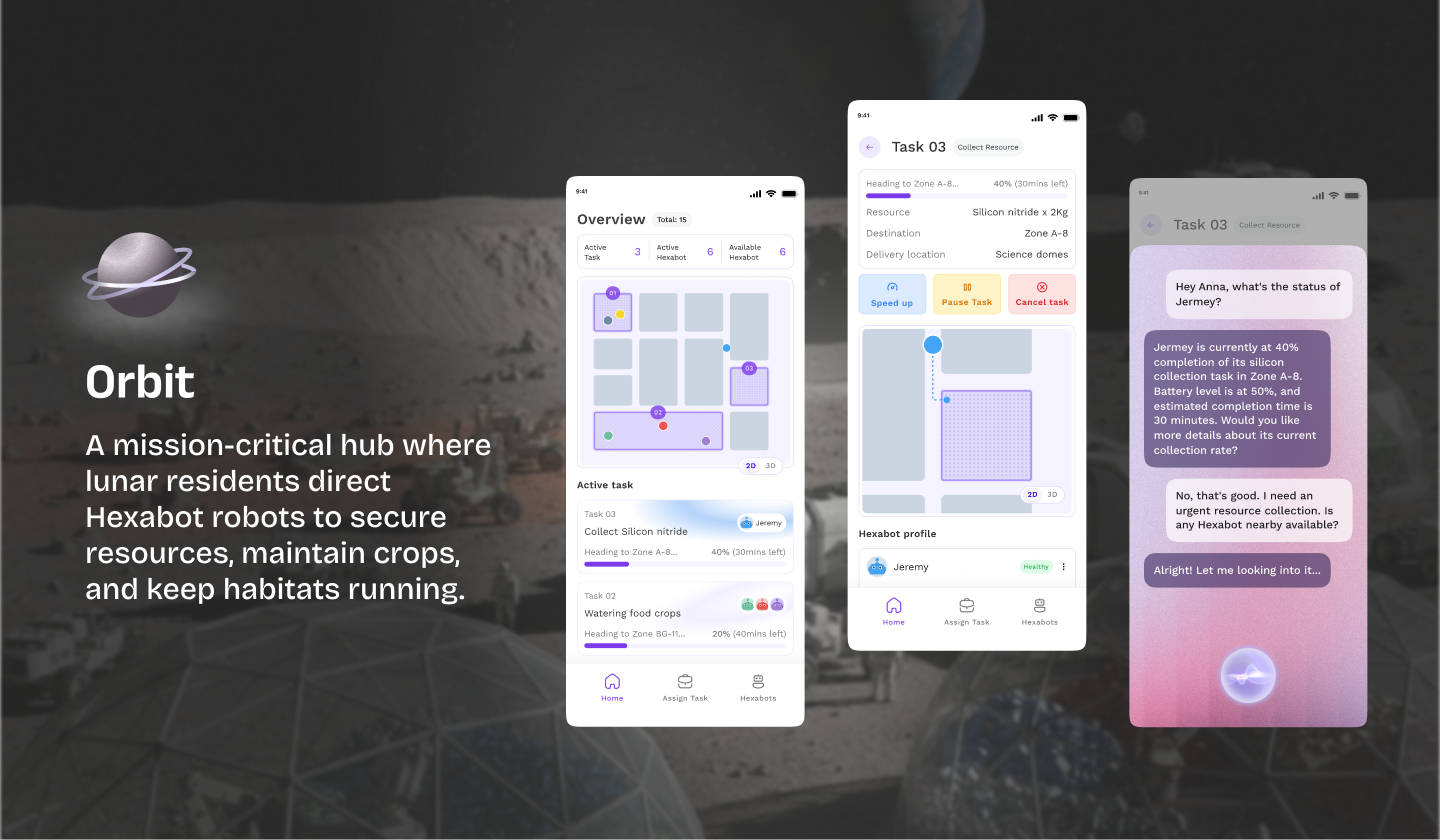
A mission-critical command center that enables lunar colony residents from researchers to families to manage Hexabot robots that perform essential survival tasks like resource collection, crop maintenance, and habitat repairs.
What’s the impact?
It transforms complex robot management into intuitive, accessible interactions that work under extreme conditions, ensuring critical missions succeed and making advanced technology usable for everyone.
1. Design Challenge
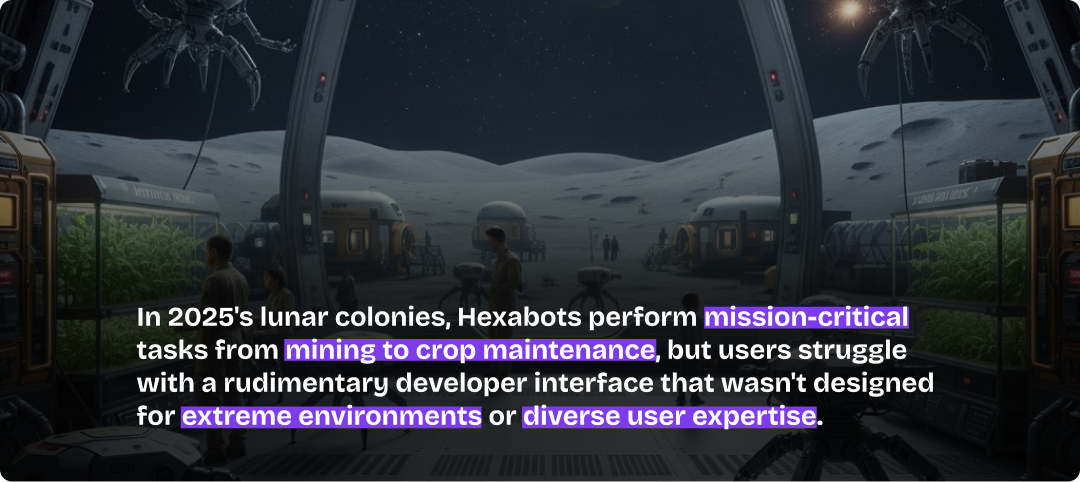
- The challenge is well-scoped through the Bending Spoons–sponsored Design Flow contest, letting me stay grounded in a clear context and focus on delivering a strong, relevant solution:
2. Key Wireflow: How Orbit enhances users' daily workflow?
- A research team in one of the lunar colony’s science domes is working on a prototype turbine using a silicon 3D printer. However, they lack the specific materials needed to complete the project.
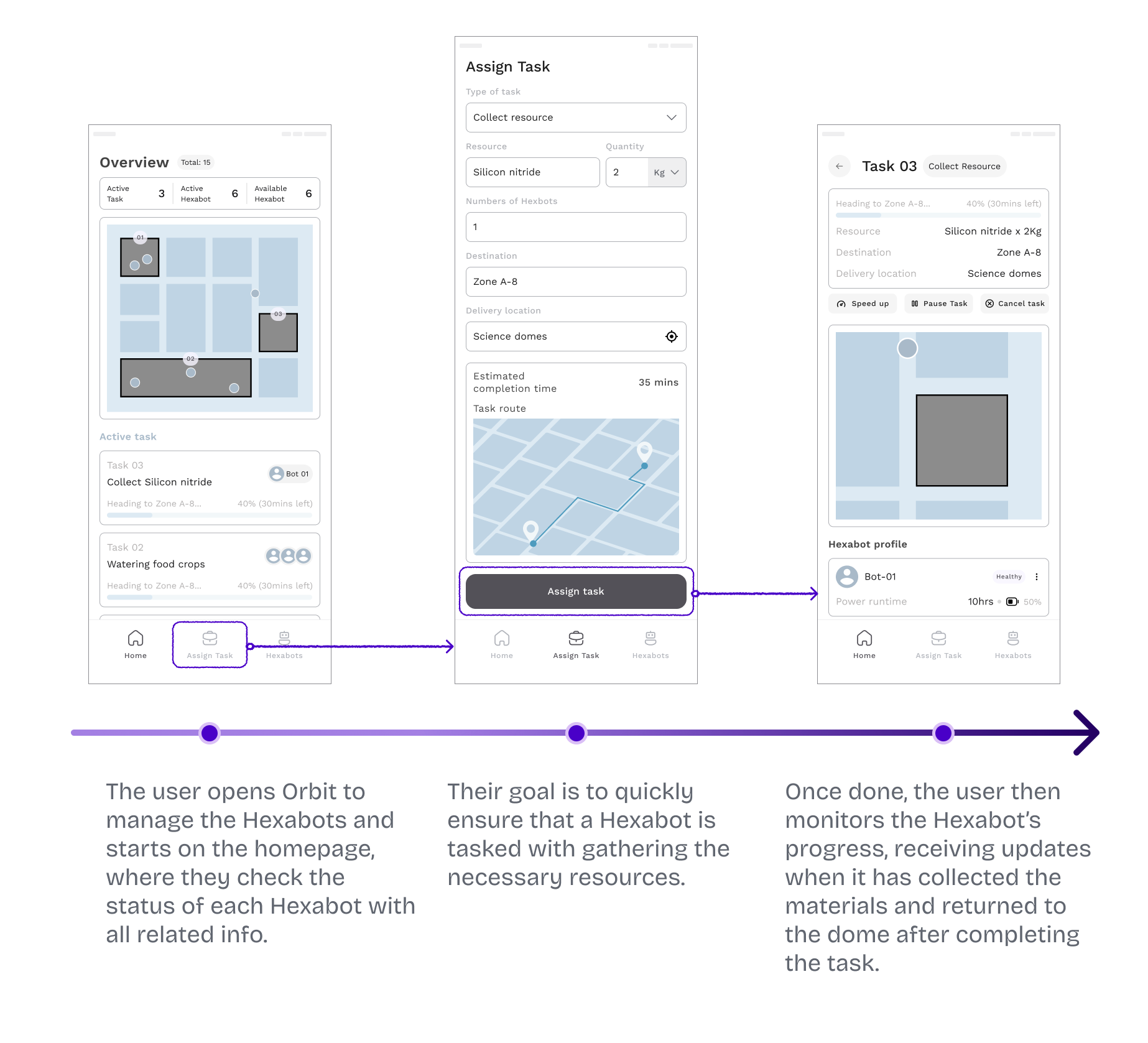
- Besides the key flow, here are features that elevate management from functional to exceptional...
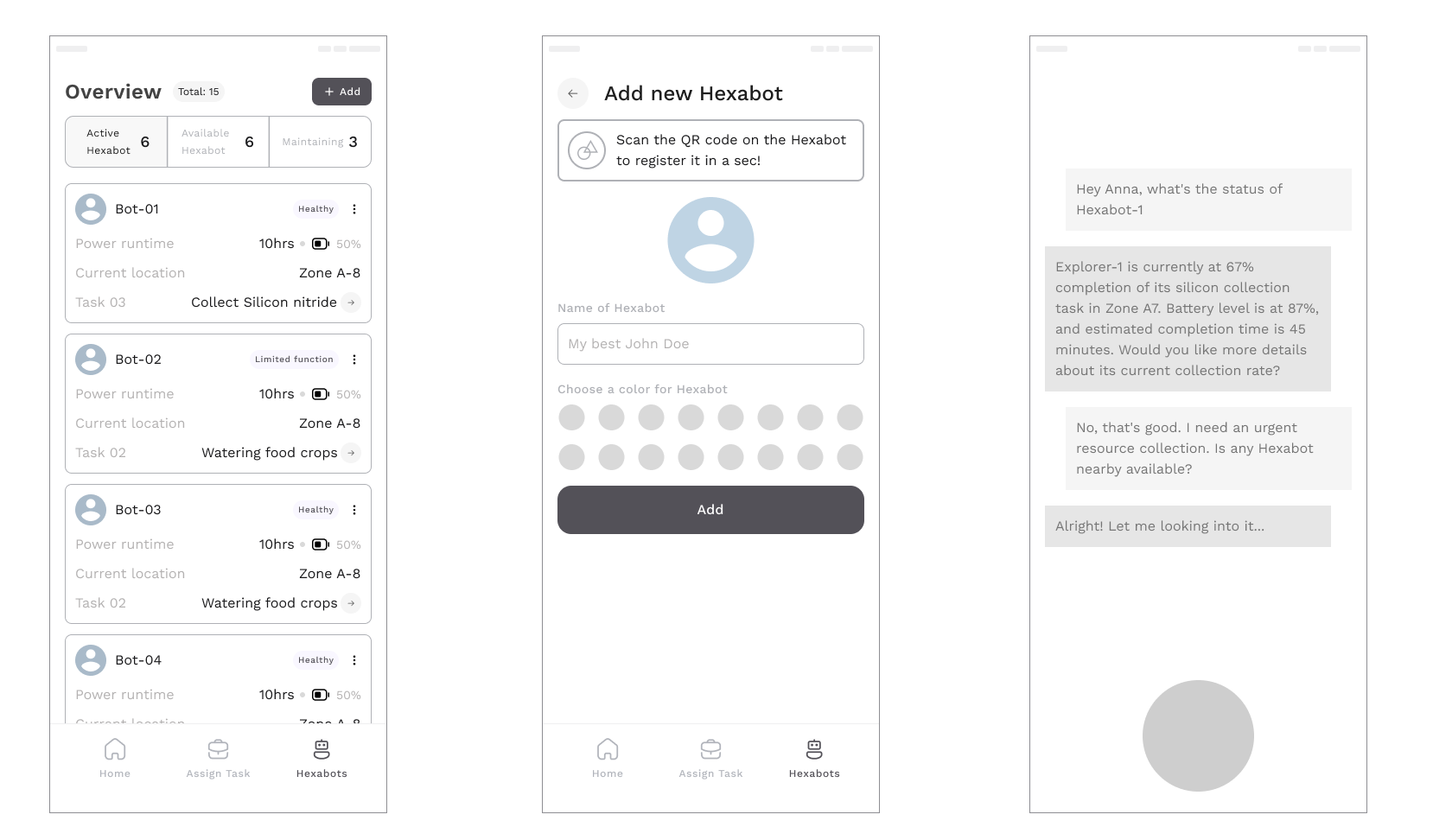
a. Understand entire operation at a glance
- Tabs at the top organize bots by status, keeping critical information always accessible.
b. Customize Hexabots
- Add new Hexabots with personalized names and color coding for effortless identification across missions.
c. Voice command, free your hands
- Voice commands eliminate the need to look at or touch the device—critical when wearing gloves or operating in fogged helmets.
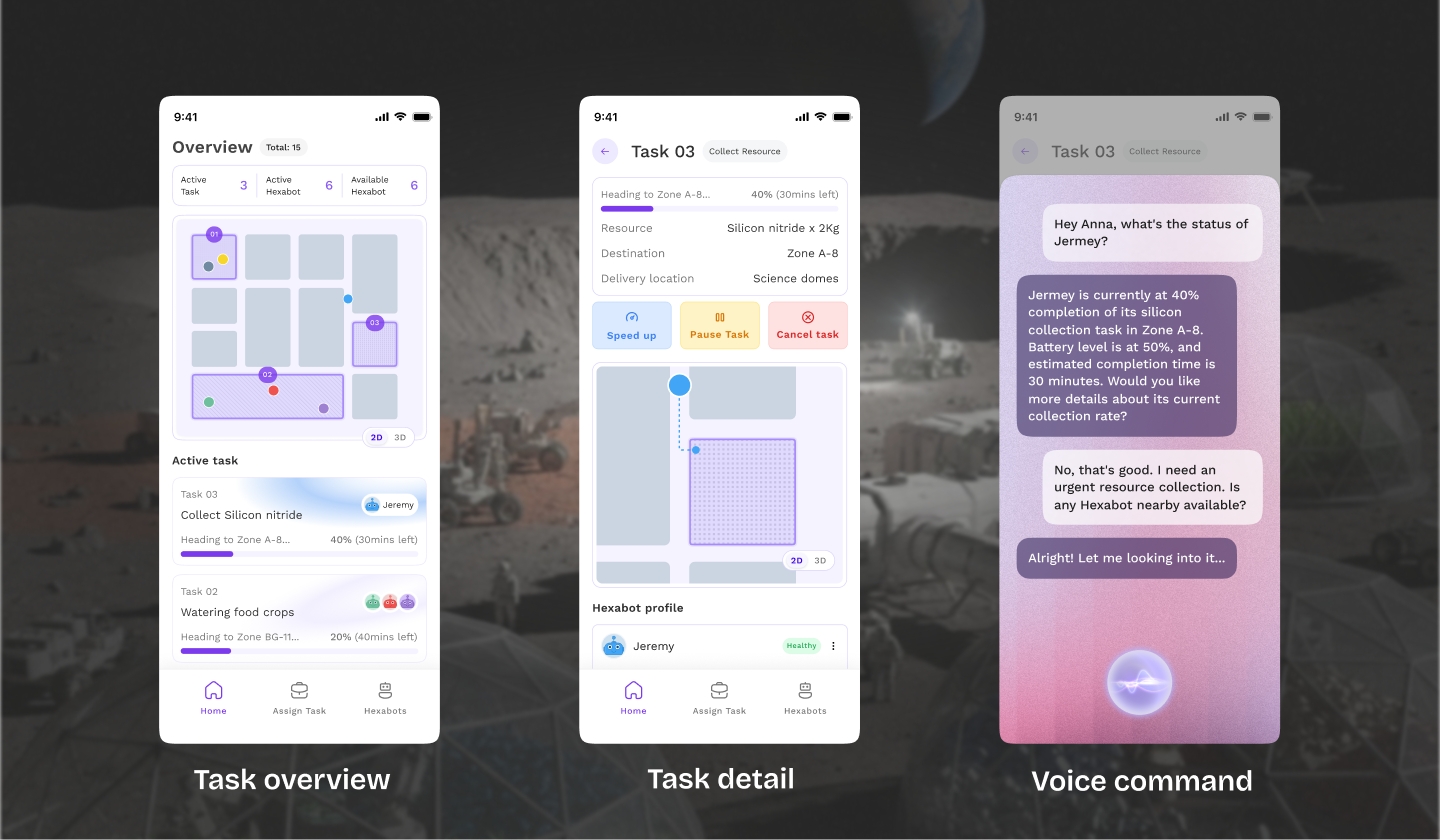
3. Three key screens demonstrate the core features
- As the design contest required, I chose 3 screens to demonstrate how the interface solves the critical user needs: instant status comprehension across all Hexabots, frictionless task assignment flows, and accessible interaction design that works even with gloved hands in crisis moments.
Now, let's dive deeper into design process...🧠
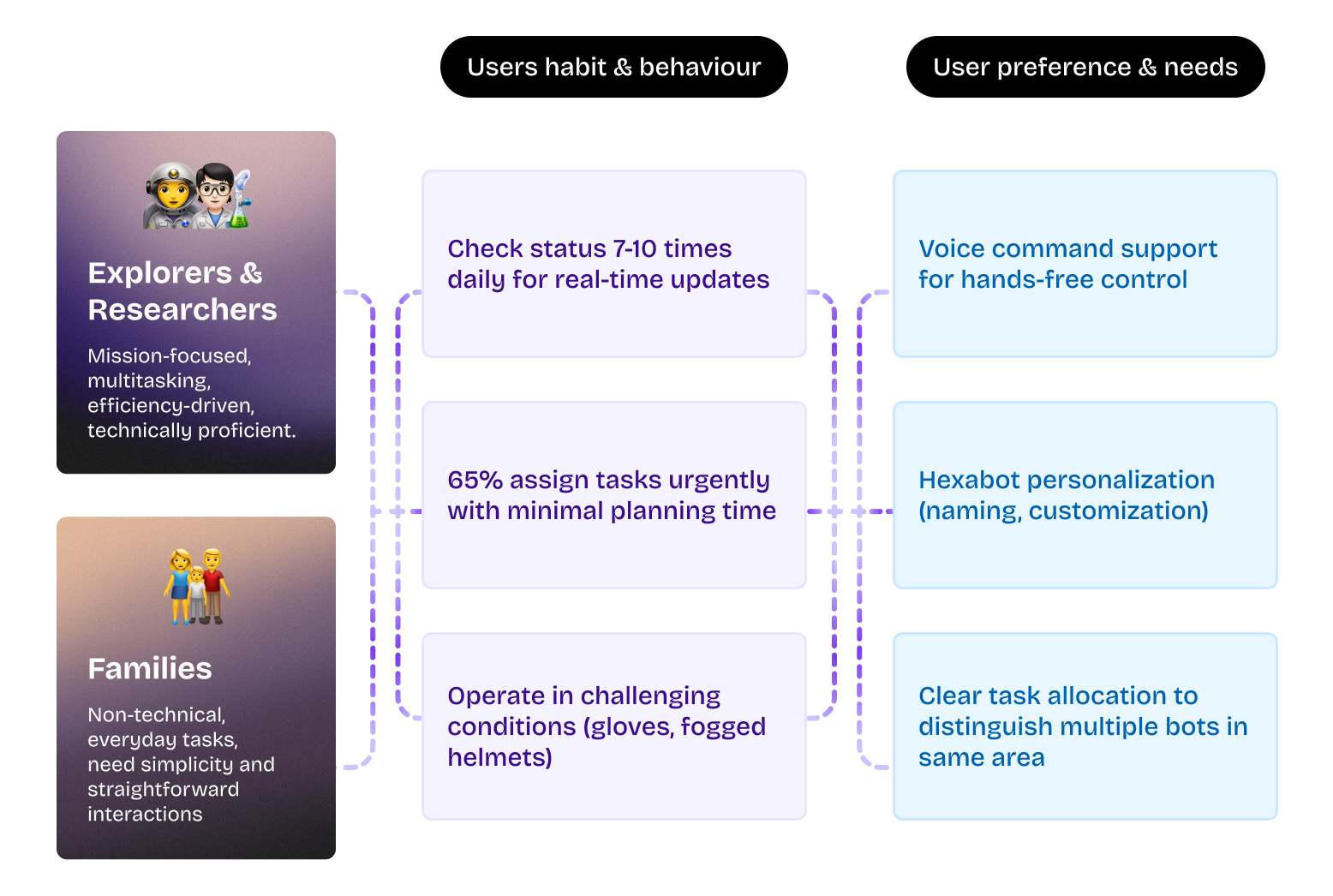
4. Who I design for and what are their needs?
- The challenge clearly predefines two distinct personas and their usage patterns, setting a focused foundation for the design.
5. My main approach to design challenge
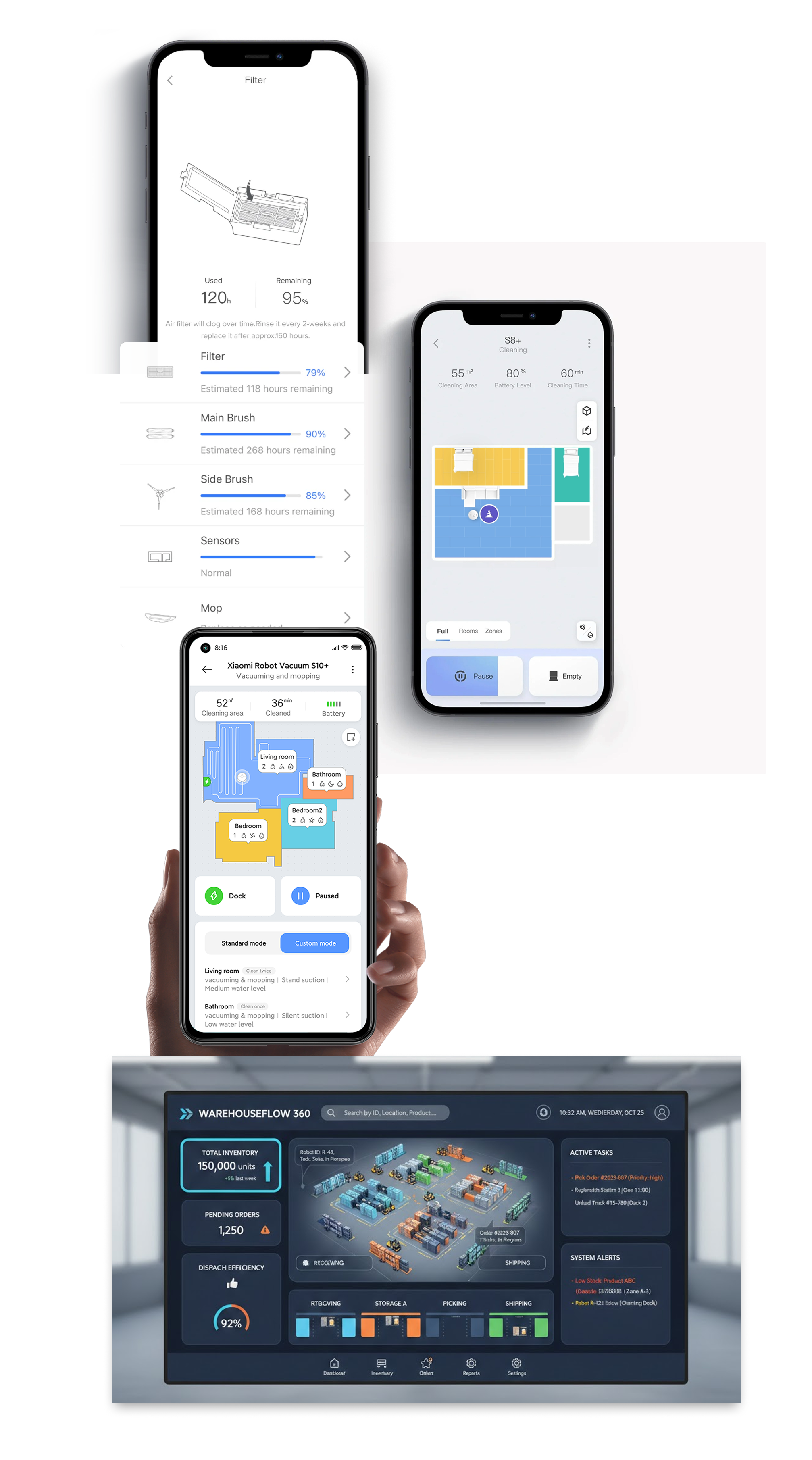
- The most crucial step for me is to exploring proven design patterns from real-time monitoring ecosystems as the users needs and pain points are well-defined initially: I reserched two product categories with relevant interaction models: warehouse management systems and robot vacuum apps. Both manage autonomous units in ways that parallel Hexabot operations. These products revealed 2 critical patterns:
a. Color-coded status indicators
- Communicate system health instantly, even from a distance.
b. Map-based tracking
- Simplify spatial understanding with minimal cognitive load.
- Why did they matter for Orbit app? Lunar environment demands glanceable, unambiguous status; and multiple simultaneous operations require clear visual hierarchy.
6. Product Design is a fasinating language
- Designing the assigned user flow for nearly 3 days in a row was deeply satisfying and reinforced my ambition to work on the Hexabot management topic in this year’s Design Flow. It pushed me to imagine how technologies we once only dreamed about are steadily becoming part of everyday life and strengthened my passion, as a product designer.
- Out of 1,300+ participants, I didn’t make it to the final round, but I learned a lot from exploring others work and the way they approached the same problem. I started noticing recurring design patterns, such as adapting dark and light modes to different user conditions and prioritizing highly accessible actions, that clearly have a real impact on the user experience.
- Product design feels like a fascinating language: different builders may speak it in their own way, yet all aim to communicate the same core meaning. Get inspired →